

Cerebras went public on May 14, 2026 at $185 per share. It closed the first day near $311 and briefly touched $386. As of the October 13 close it trades around $149 — roughly 52% below the first-day close and about 21% below the IPO price. Market capitalization sits near $35 billion. Analyst consensus remains Strong Buy with an average price target around $292, implying substantial upside if the company executes.
The stock’s recent volatility has been driven by two overlapping factors: reports that some OpenAI Ultrafast workloads moved to Nvidia GPUs, and the staggered post-IPO lockup schedule that continues to release shares. Neither issue has invalidated the core contract, but both have tested investor confidence in the near term.
The Technology Edge: Wafer-Scale for Inference
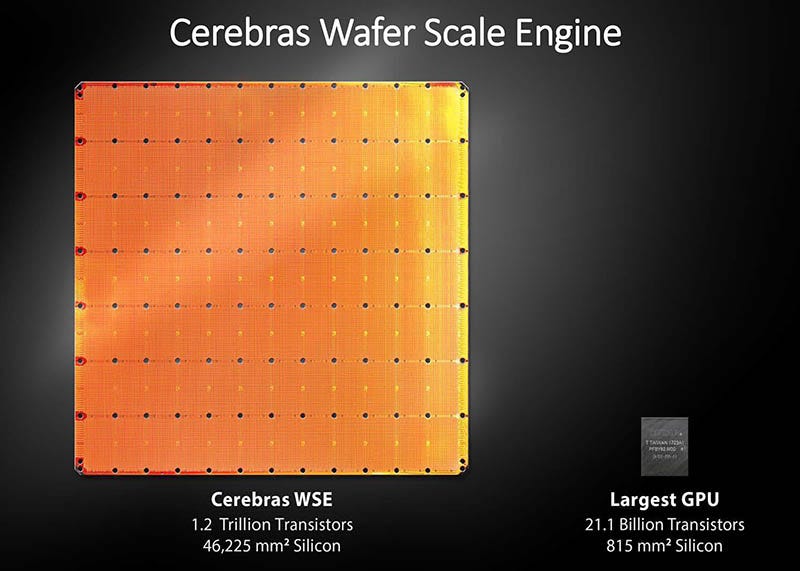
Cerebras’s core product is the Wafer-Scale Engine. Rather than cutting a silicon wafer into hundreds of individual dies, the company uses the entire wafer as a single processor. The current WSE-3 generation contains roughly 4 trillion transistors and 900,000 cores, with approximately 44 GB of on-wafer SRAM.
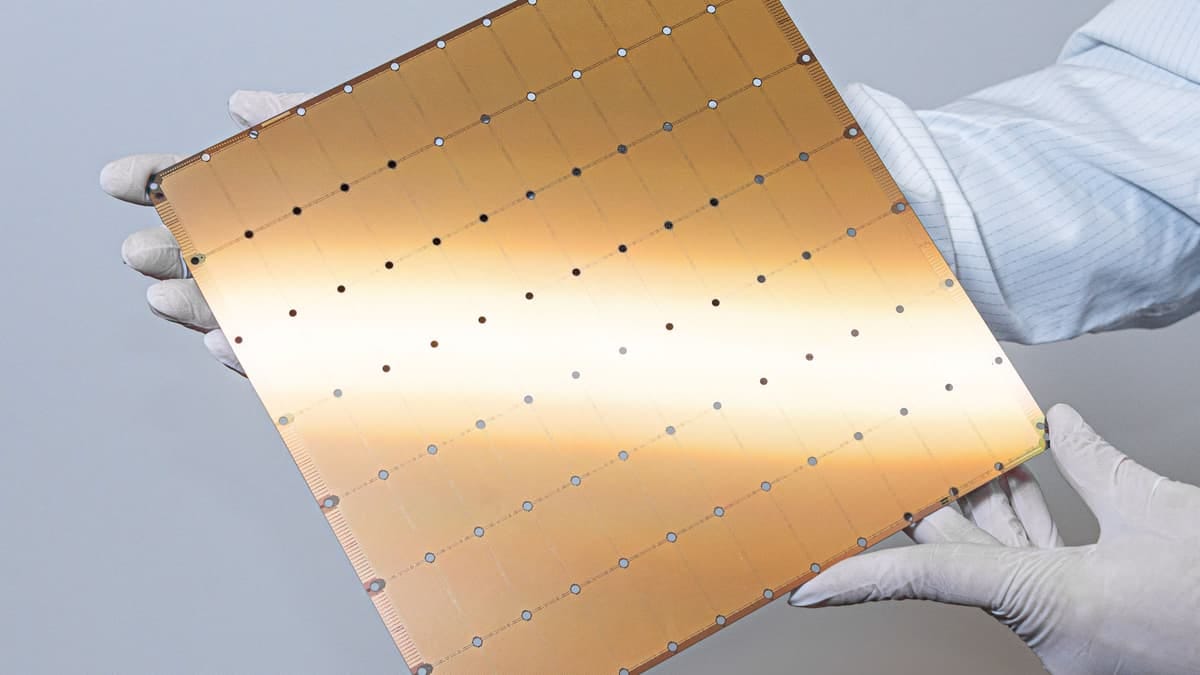
This architecture addresses a fundamental bottleneck in inference. Generating tokens is primarily a memory-bandwidth problem. On conventional GPUs, model weights reside in HBM and must be streamed to the compute units for every token. Cerebras places a large portion of the model weights directly on the wafer, eliminating most of that trip. The company claims aggregate memory bandwidth on the order of 21 PB/s — orders of magnitude higher than an H100.
The practical result has been measurable speed advantages on hosted inference. Cerebras has demonstrated multi-thousand tokens per second on various open models, and OpenAI previously used the platform for an Ultrafast tier of GPT-5.6 Sol at roughly 750 tokens per second. Newer systems such as the CS-4 (three WSE-3 Turbo wafers per rack) claim further gains in tokens-per-second-per-user and efficiency.
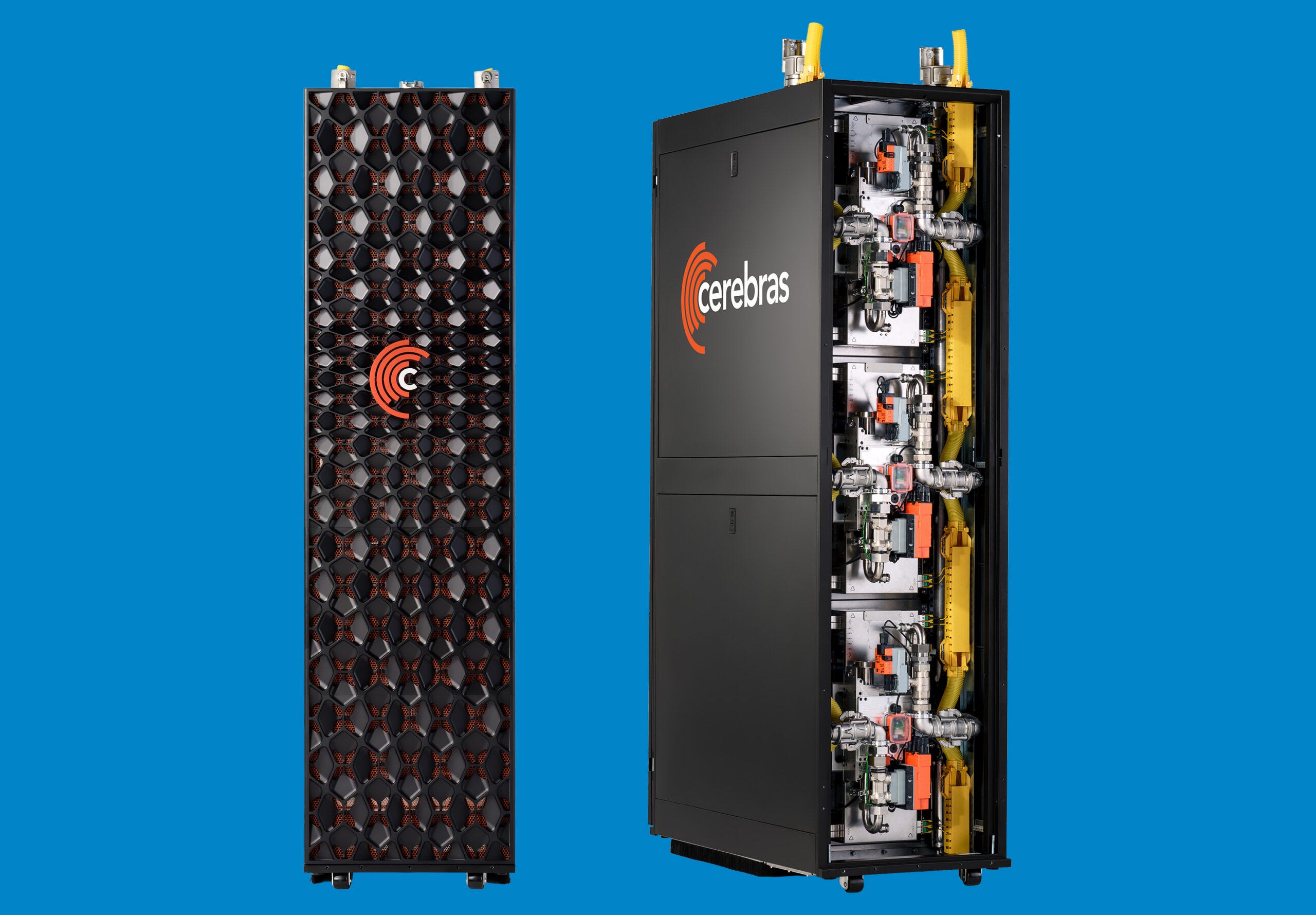
One under-appreciated detail in the CS-4 design is the power delivery path. In a conventional system the distance from the voltage regulators to the compute die is often on the order of 50 mm. Cerebras packs conversion, liquid cooling, and I/O into a pluggable “backpack” that sits directly against the wafer, reducing that gap to roughly 0.5 mm. The shorter path cuts impedance and enables the higher clocks on the WSE-3 Turbo. It is a small mechanical change with a large electrical consequence — the kind of systems-level optimization that is easy to overlook when the conversation stays at the level of “wafer versus GPU.”


The company has also announced disaggregated inference architectures with AMD (Helios for prefill, Cerebras for decode) targeting higher tokens per second per watt, and a similar approach with AWS Trainium for Bedrock.
The advantage is clearest for latency-sensitive, interactive, or agentic workloads where tokens-per-second-per-user matters more than raw throughput per dollar. It is less relevant for high-concurrency batch inference or training. Cerebras is not trying to replace Nvidia across the entire stack; it is arguing for a specialized role in the decode phase and for workloads that value speed. That distinction has been consistent in primary statements from both Cerebras and OpenAI, even as third-party reporting has focused on individual model launches running elsewhere.
The OpenAI Master Relationship Agreement
In December 2025 Cerebras signed a Master Relationship Agreement with OpenAI. Under the agreement OpenAI committed to purchase 750 MW of AI inference capacity, delivered in three 250 MW segments:
250 MW by the end of 2026
Additional 250 MW by the end of 2027 (cumulative 500 MW)
Additional 250 MW by the end of 2028 (cumulative 750 MW)
OpenAI also holds an option, not a commitment, for an additional 1.25 GW by the end of 2030. Cerebras has valued the committed portion at more than $20 billion. OpenAI provided an approximately $1 billion secured working-capital loan (partly repayable via service credits) and received warrants tied to milestones, including capacity delivery.
Remaining Performance Obligations stood at $25.4 billion as of June 30, 2026. Management has stated that a significant portion is attributable to the OpenAI agreement. Recognition is deliberately back-loaded: the company expects only about 22% (roughly $5.6 billion) to be recognized in the 24 months ending June 30, 2028, with another 43% in the subsequent 24 months. In Q2 2026 Cerebras recognized approximately $56.8 million of revenue under the arrangement, equal to roughly 32% of GAAP revenue.
The contract does not prevent OpenAI from using other hardware for specific tiers or models. Reports that a newer Ultrafast offering ran on Nvidia GPUs therefore do not cancel the 750 MW commitment. They do, however, reduce the probability that the 1.25 GW option will be exercised and weaken the narrative that Cerebras exclusively powers OpenAI’s fastest service. Sam Altman’s subsequent statement that Cerebras is a “close partner” provided some reassurance on the committed capacity.
Importantly, management has noted that the $25.4 billion RPO figure does not currently include material backlog from AWS or other hyperscalers. Any AWS Bedrock contribution would be incremental.

Financial Snapshot and Margin Path
Q2 2026 results (August 12) showed:
Core (non-GAAP) revenue of $209.9 million, up 103% year-over-year
Core cloud and other services revenue of $127.7 million, up 287%
Core gross margin of approximately 40.6–41%
Core operating margin of –16% (improved by roughly 2,600 basis points year-over-year)
GAAP revenue of $180.1 million (the difference largely reflects customer-warrant amortization and pass-through data-center costs)
Management raised full-year 2026 core revenue guidance to $880–890 million and core gross margin guidance to 41–43%. Core operating margin guidance for the year is –19% to –17%. The company has stated it expects core revenue to more than triple in 2027. UBS has published a more aggressive path: roughly $890 million in FY26E, $3.3 billion in FY27E, and approximately $22.6 billion in FY30E with a 46% EBIT margin. Consensus estimates are somewhat more conservative but still imply more than a tripling of revenue by 2027.
Near-term GAAP gross margins are depressed by leaseback arrangements (Cerebras has rented back some of its own systems to meet demand while owned capacity is built) and by warrant amortization. Core margins, which exclude these items, are the metric management emphasizes. The path to the longer-term 40%+ core operating margin target depends on shifting from higher-cost rented capacity to owned data centers and on improved utilization and pricing.
Capacity Buildout
Cerebras has stated that more than 600 MW of data-center capacity is live or under contract for delivery by the end of 2027. Manufacturing capacity is expected to scale more than 10× in 2026, with additional lines at Flex, Sanmina, and Rocket EMS, and secured TSMC wafer supply. European capacity is targeted at roughly 200 MW by the end of 2027 (France and the Nordics), including a phased 165 MW project in Mikkeli, Finland. The company has also referenced a gigawatt-scale pipeline of potential sites.
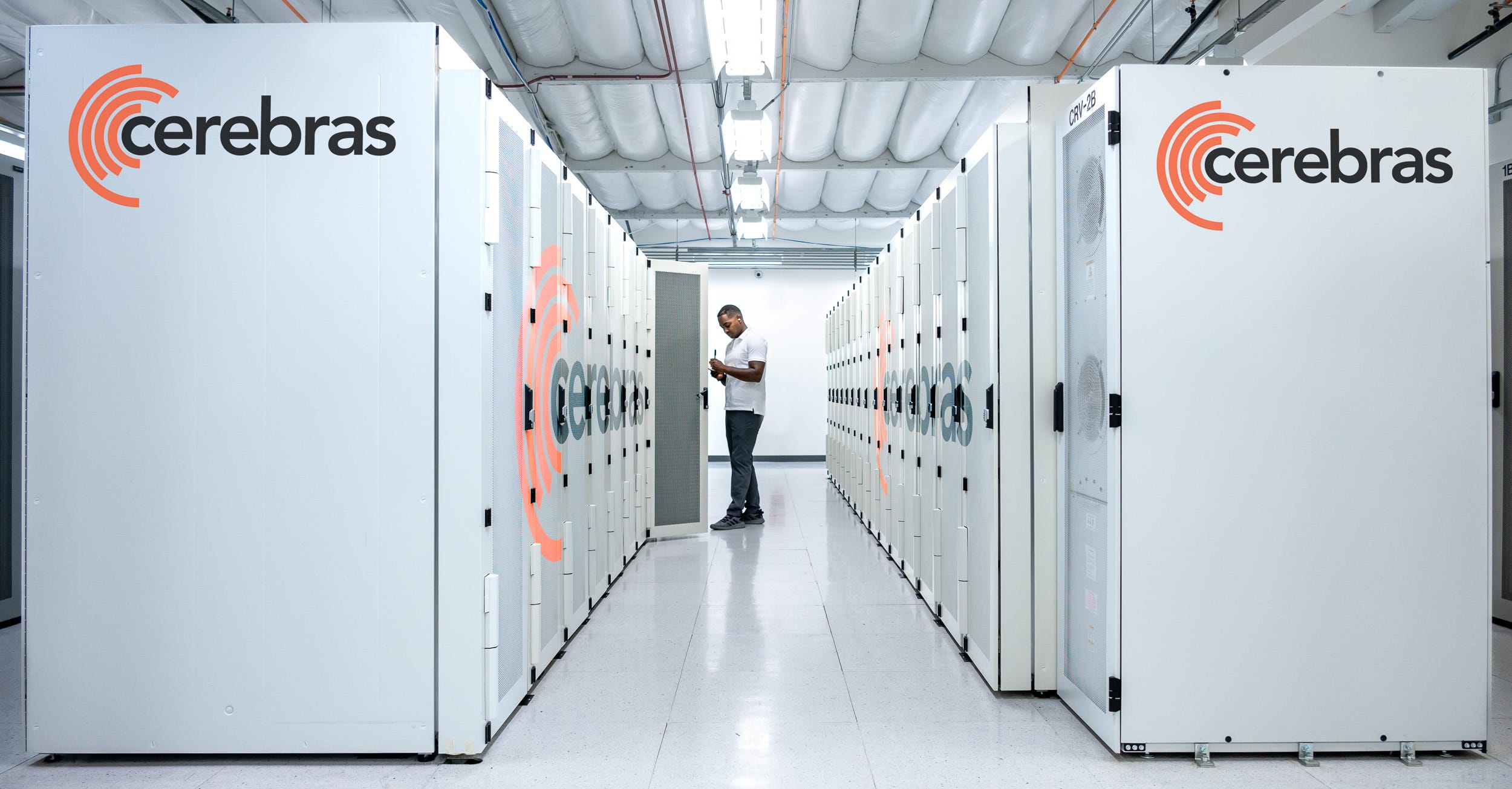
The OpenAI deployment schedule requires capacity to come online in stages through 2028. Delays in site selection, power interconnection, or construction could affect revenue recognition timing and, in extreme cases, trigger contractual remedies. Management has acknowledged the need to accelerate data-center buildout.
Partnerships and Diversification Efforts
Beyond OpenAI, Cerebras has announced:
An AWS collaboration pairing Trainium (prefill) with Cerebras (decode), targeted for Amazon Bedrock in Q1 2027
An AMD partnership for a disaggregated Helios + Wafer-Scale Engine solution, expected in production on Cerebras Cloud in Q4 2026, with claimed efficiency gains
A CrowdStrike partnership under which Falcon AI Detection and Response models run on Cerebras hardware; Cerebras also standardizes on Falcon for its own security
Other named customers or users including Cognition, Lovable, Block, Figma, AlphaSense, GSK, and various open-model hosts
These relationships broaden the addressable use cases (coding agents, cybersecurity, enterprise inference) and reduce, over time, the percentage of revenue coming from any single customer. OpenAI is still expected to remain meaningful in 2027.
Lockup Schedule and Insider Selling
Cerebras structured its lockup as a staggered release rather than a single expiration date. Smaller tranches of approximately 14.6 million shares were released biweekly starting in mid-August. Larger tranches of up to 19.4 million shares were scheduled for September 30, October 14, and October 28. The final lockup expires on the earlier of the second trading day after third-quarter results or November 9, 2026. In total, an estimated 171 million shares are subject to early release under the published schedule.
“Up to” means the figure is a ceiling; not every eligible share will be sold. Still, prior unlock dates have coincided with price declines. Separately, insiders have sold substantial amounts under 10b5-1 plans. CEO Andrew Feldman and CTO Sean Lie sold more than $240 million of Class A shares between late August and late September. The COO sold roughly $81 million around the end of September. Cumulative insider sales since the IPO run into the hundreds of millions of dollars. Most were planned, but the volume contributes to supply overhang perceptions.
Valuation Context and Risks
At roughly $35 billion market cap and ~$890 million of 2026 core revenue guidance, the stock trades at a high multiple of near-term sales. The multiple compresses rapidly if 2027 revenue approaches the $3 billion range and continues to scale. The company still reports significant GAAP losses, and free cash flow is negative while capital is deployed into data centers. Customer concentration, execution risk on the multi-year buildout, and competition from Nvidia (and specialized inference players such as Groq) remain the primary risks. The 1.25 GW option is not contracted revenue and should not be treated as such.
Key Watch Items
Q3 2026 results and whether core revenue and margin guidance are met
Progress on the 2026 OpenAI capacity tranche and overall data-center deliveries
Any clarification on OpenAI Ultrafast hardware mix or option exercise signals
Further lockup-related supply and insider activity through late October and early November
Evidence of customer diversification and contribution from AWS, AMD, or security workloads
Transition from rented to owned capacity and its impact on core margins
Cerebras has a differentiated architecture that is well suited to a growing class of latency-sensitive inference workloads, a large contracted backlog anchored by OpenAI, and the cash raised in its IPO to fund expansion. Converting that backlog into recognized, high-margin revenue on schedule, while reducing customer concentration and navigating ongoing share supply, is the multi-year test that will determine whether the current valuation is attractive or still demanding.
Check my previous post too
https://svtrivo.substack.com/p/the-one-wafer-pitch-ended-at-hot?r=2vjt9r&utm_campaign=post-expanded-share&utm_medium=web