

Executive Summary
The dominant narrative across the AI hardware ecosystem over the past two years has been remarkably singular: pure-play silicon designers—most notably NVIDIA—monopolize economic rent, while system-level Original Equipment Manufacturers (OEMs) operate as low-margin assemblers passing capital directly upstream.
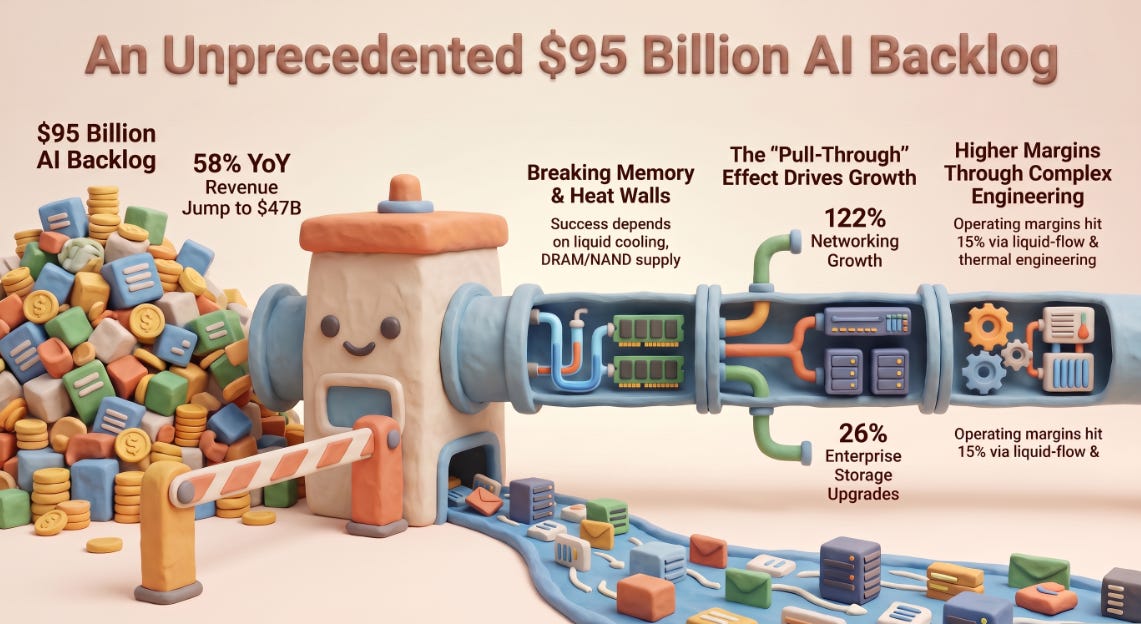
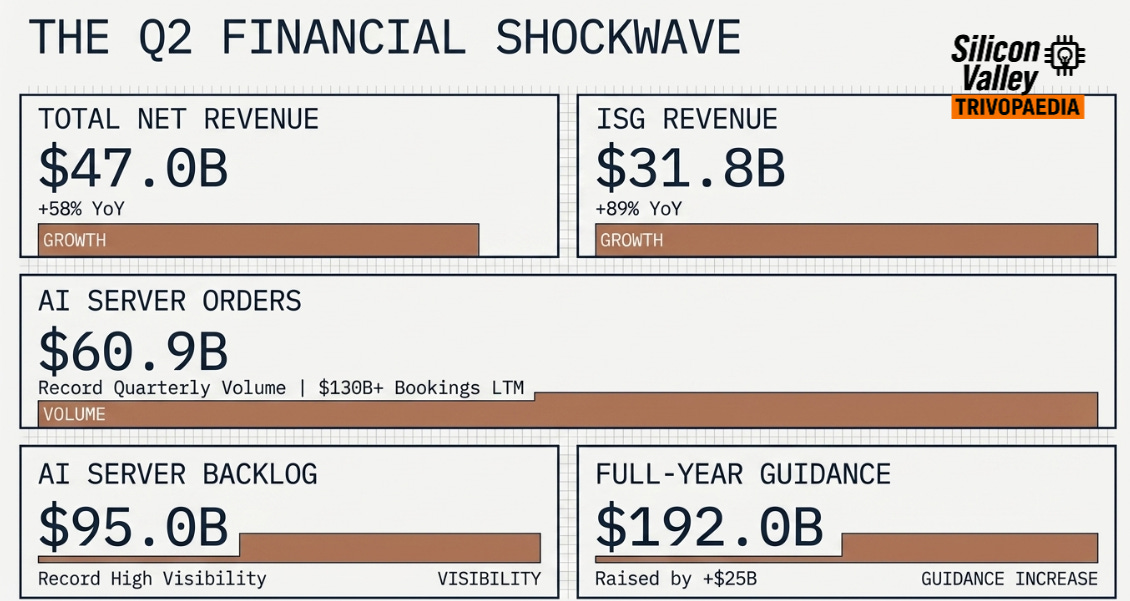
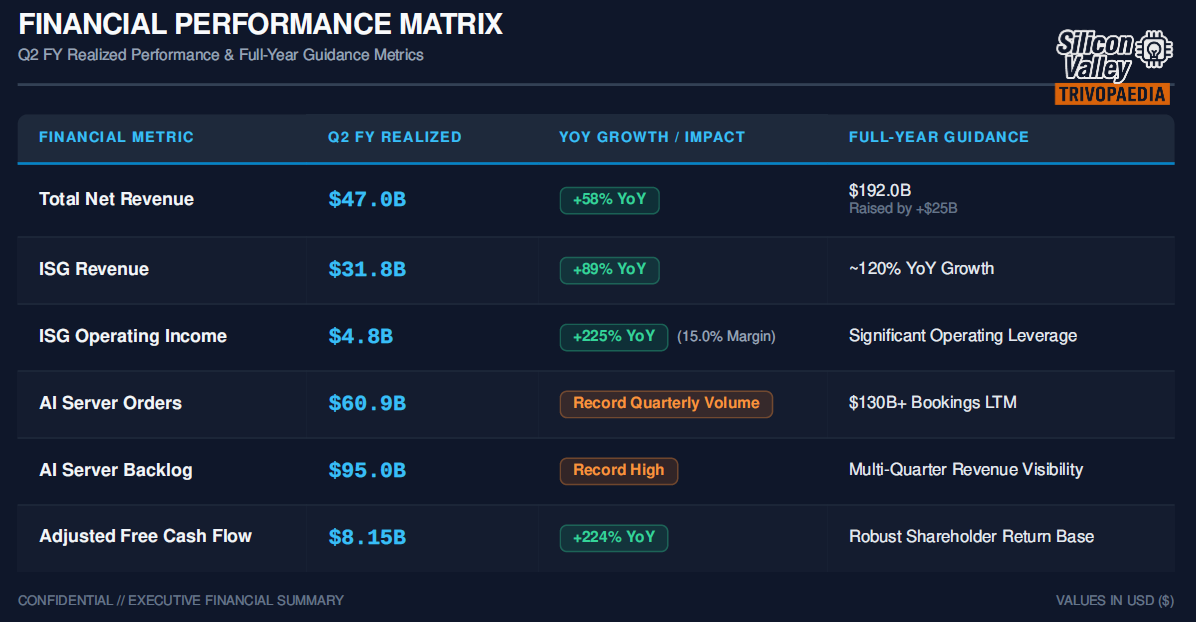
Dell Technologies’ fiscal Q2 earnings report thoroughly dismantles this view. Delivering $47.0 billion in total net revenue (+58% YoY), $16.4 billion in AI-optimized server revenue, and an unprecedented $95.0 billion AI server backlog, Dell’s Infrastructure Solutions Group (ISG) expanded operating margins to 15.0% ($4.8 billion in segment operating income, up 225% YoY).
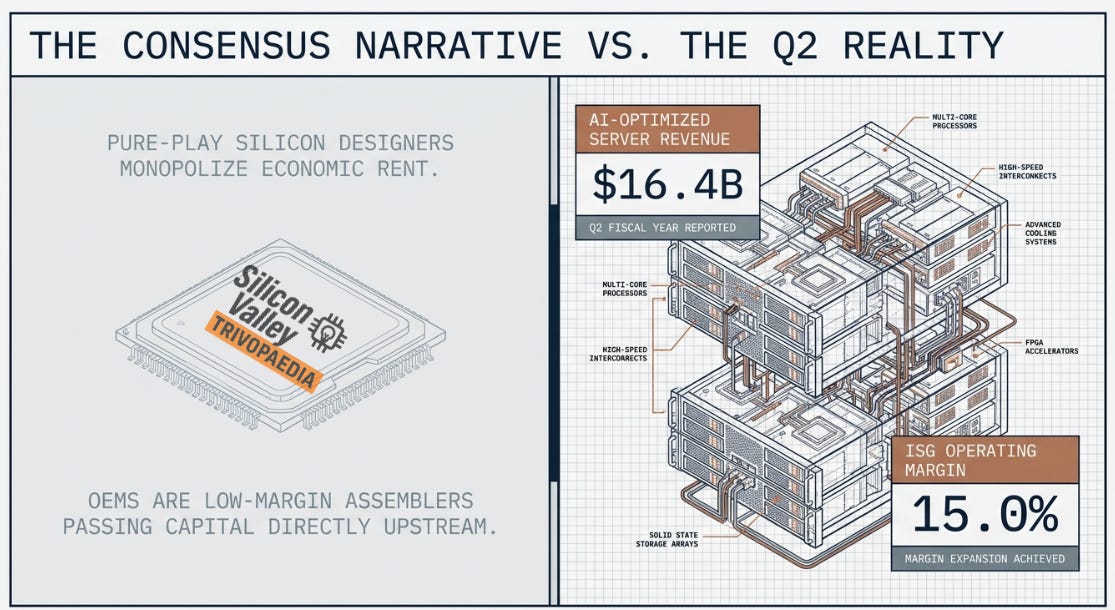
This performance, paired with a full-year revenue guidance increase of $25 billion to $192.0 billion, signals a structural transition in the market: as GPU compute scaling runs into acute memory and thermal boundaries, system-level architecture, enterprise integration, and supply-chain tollbooths dictate the pace of AI deployment.
1. TECH: The Infrastructure Triad—Memory, Liquid Cooling, and Storage Pull-Through
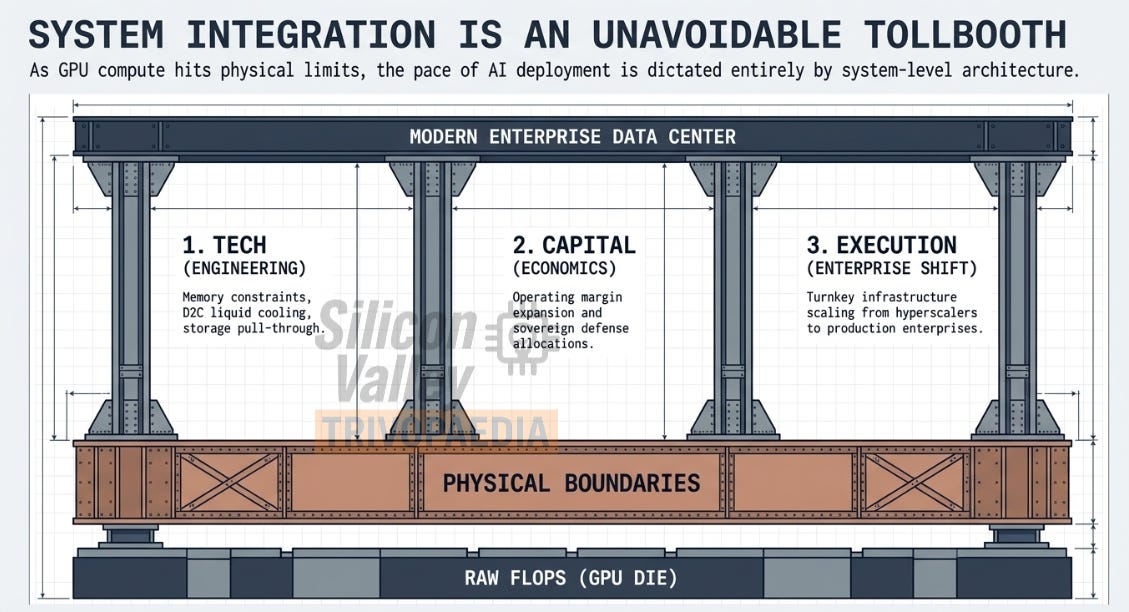
Raw floating-point operations per second (FLOPS) on an accelerator die are functionally useless without a balanced systems architecture. Dell’s Q2 results highlight three technical gating factors redefining OEM value capture:
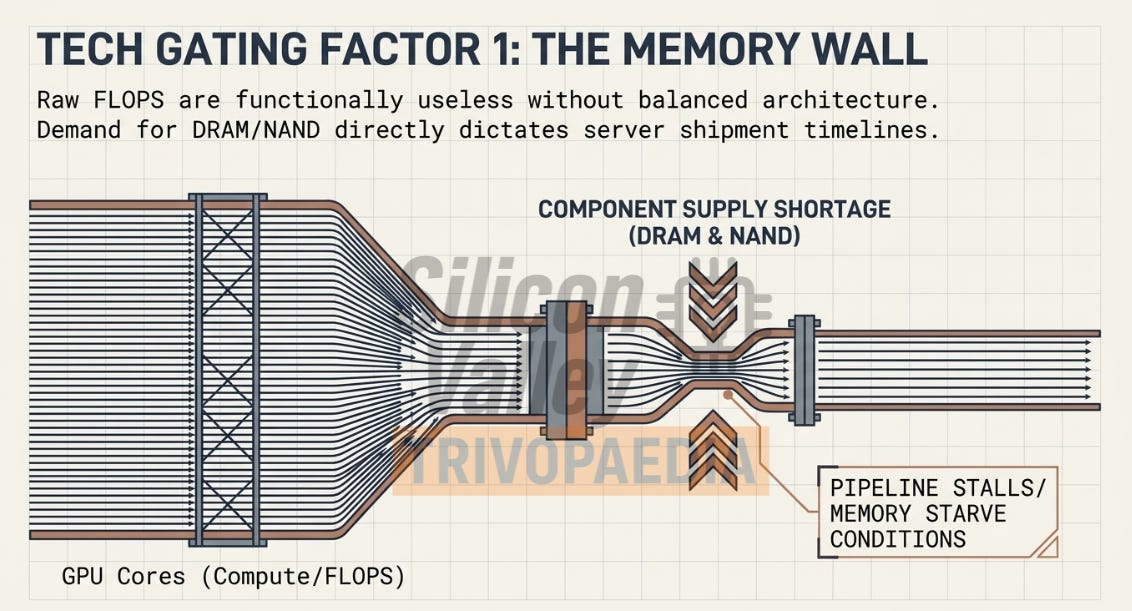
Tech Gating Factor 1: The Memory Wall
While market attention remains focused on GPU availability, Dell management explicitly cited component supply shortages in DRAM and NAND memory as the primary bottleneck restricting immediate fulfillment.
When training large language models (LLMs) or executing multi-tenant inference workloads, GPU cores face severe pipeline stalls if memory bandwidth and capacity lag. System integration requires balancing high-bandwidth memory (HBM) on the accelerator with massive DDR5 main memory pools and enterprise ultra-low latency flash storage tiers to prevent memory starve conditions.
Tech Gating Factor 2: Thermal Physics and Liquid Cooling
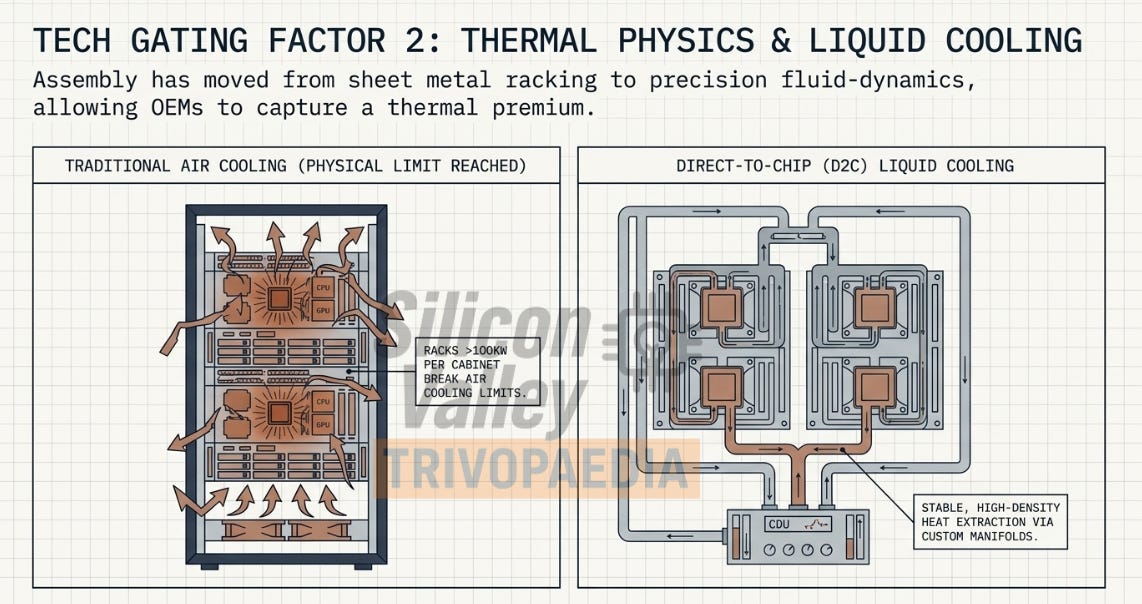
As rack power densities exceed 100kW per cabinet, traditional air cooling reaches physical limits. Direct-to-Chip (D2C) liquid cooling, coolant distribution units (CDUs), and custom manifold engineering move system assembly from standard sheet-metal racking into precision liquid-flow engineering.
OEMs that engineer custom, thermally-optimized racks remove the deployment burden from enterprise data centers that lack specialized fluid-dynamics capabilities.
Tech Gating Factor 3: The System Pull-Through Effect
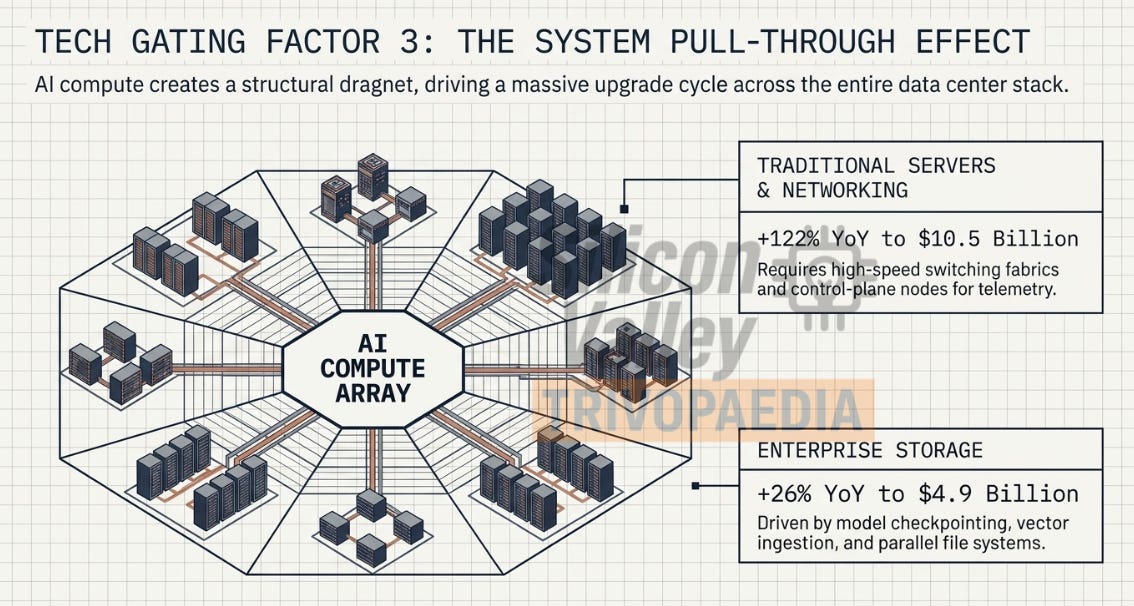
Deploying AI server racks creates a structural pull-through effect across enterprise infrastructure:
Traditional Servers & Networking: Grew 122% YoY to $10.5 billion. High-throughput AI clusters require dedicated ingress/egress control-plane nodes and high-speed switching fabrics to handle telemetry and job orchestration.
Enterprise Storage: Grew 26% YoY to $4.9 billion. Model checkpointing, vector database ingestion, and unstructured data indexing demand parallel file systems and high-IOPS IP storage arrays directly adjacent to compute clusters.
2. CAPITAL: Operating Margin Expansion and Political Portfolio Allocations
The market thesis that system integrators operate on pass-through economics is countered by Dell’s underlying cash generation and margin expansion.
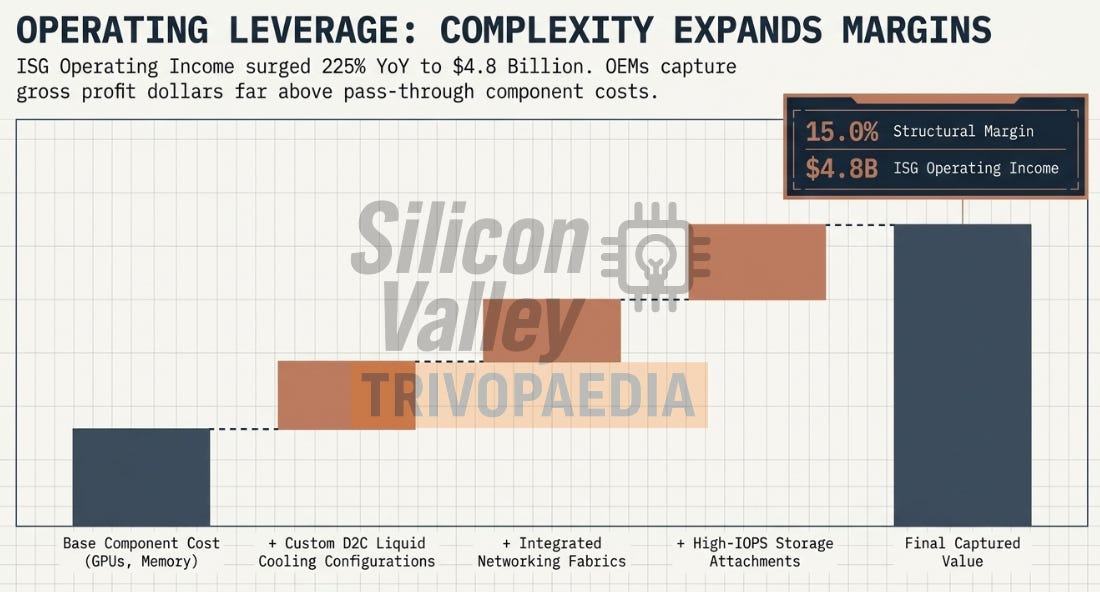
Operating Leverage: Complexity Expands Margins
ISG operating income surged 225% YoY to $4.8 billion, driving segment operating margins to 15.0%. This margin expansion confirms that custom liquid-cooling configurations, integrated networking, and storage attachments allow OEMs to capture gross profit dollars far above base component costs.
Political Catalysts & Sovereign Capital Allocations
Public financial disclosures show Donald Trump’s personal portfolio acquired between $1 million and $5 million in Dell stock, closely preceding public remarks urging institutional and federal entities to “Trump Said “Go Buy a Dell” — But the Market Bought the AI Server Story”. This was shortly followed by landmark federal allocations, including a $9.7 billion U.S. Department of Defense enterprise contract.

Sovereign entities and federal defense agencies require secure, supply-chain-audited domestic system integrators capable of delivering air-gapped, turn-key AI hardware. Capital flows into domestic OEMs reflect their strategic role in securing national sovereign compute capacity.


3. EXECUTION: The Enterprise Shift from Hyperscale to Production
The first phase of the AI cycle was driven primarily by hyper-scaler capital expenditure for foundation model training. The secondary phase—deploying fine-tuned models and inference workloads inside global enterprise networks—presents a different execution challenge.
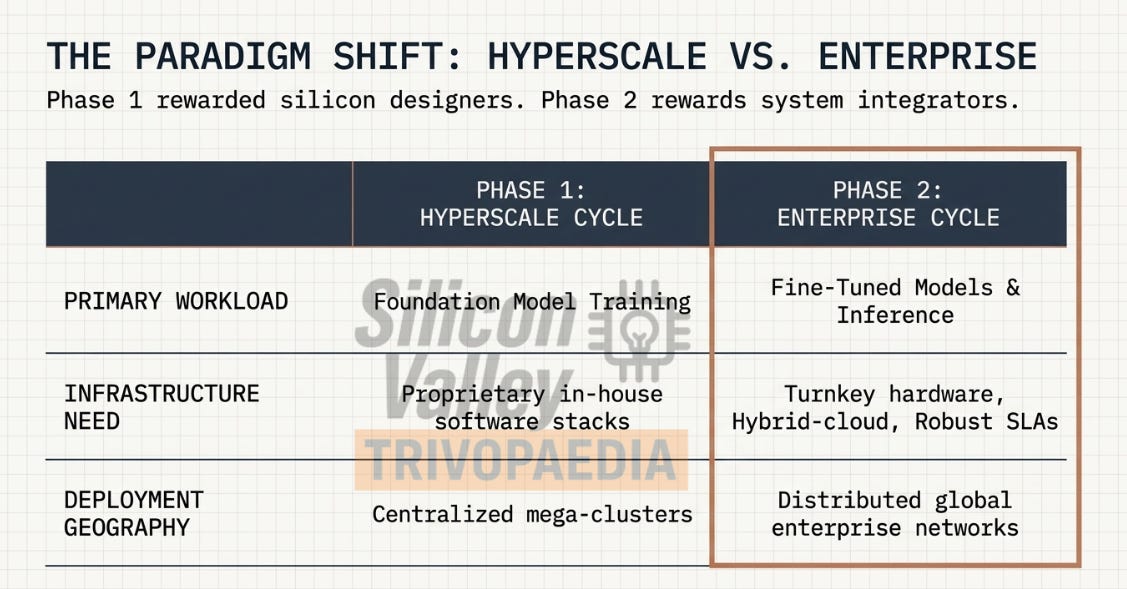
Expanding Enterprise Base: Dell added 3,300 new AI customers over the last three quarters, bringing its total enterprise AI customer count past 6,500.
Turnkey Infrastructure Requirements: Unlike hyper-scalers that build proprietary software stacks, enterprise clients require turnkey hardware solutions, robust Service Level Agreements (SLAs), on-site maintenance, and hybrid-cloud management software.
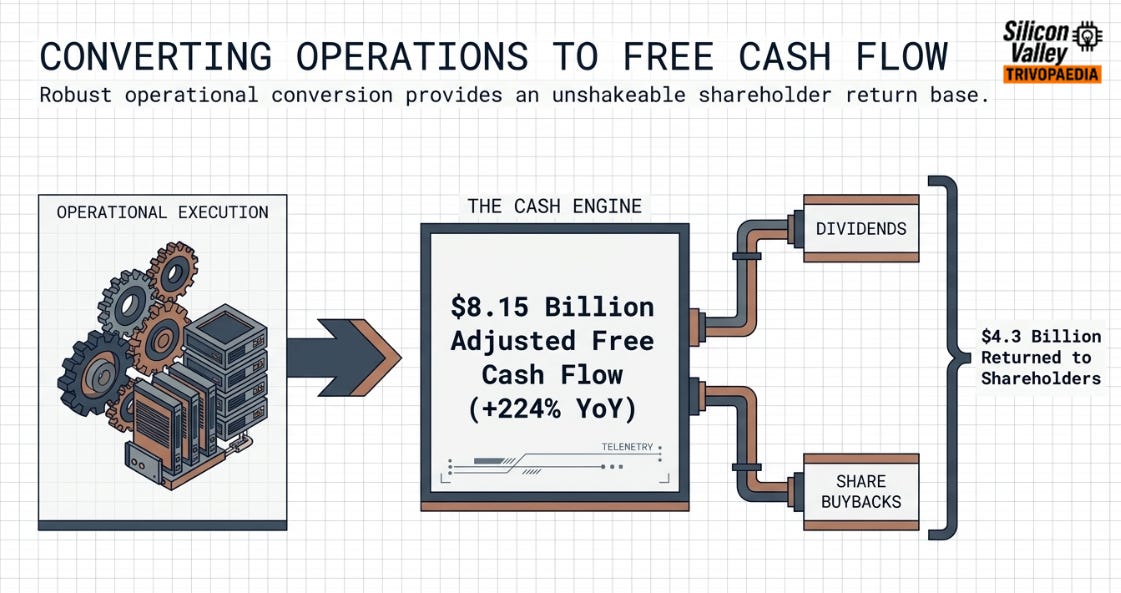
Cash Flow Conversion: Dell converted operational execution into $8.15 billion in adjusted free cash flow during the quarter, returning $4.3 billion to shareholders via dividends and share buybacks.
The Synthesis: The Tollbooth Flywheel
When synthesizing TECH, CAPITAL, and EXECUTION, Dell’s strategic positioning becomes clear: system integration acts as a self-reinforcing flywheel.
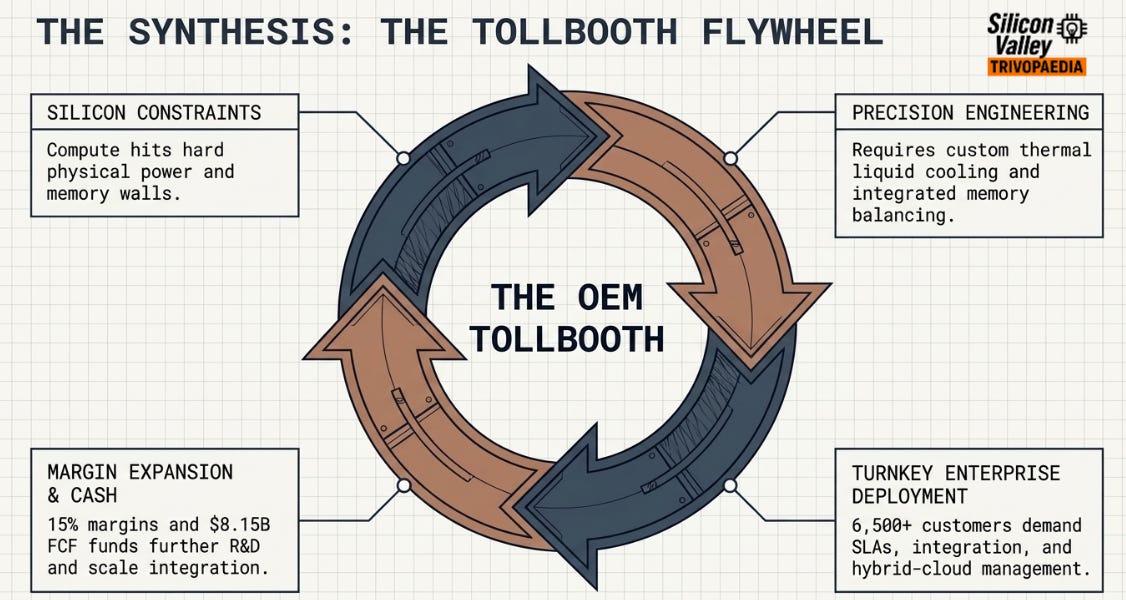
As silicon hits physical power and memory walls, precision engineering creates high barriers to entry. Turnkey enterprise deployments yield predictable, high-margin revenue streams, generating the operational cash flow needed to fund further R&D and scale supply-chain integration.
Strategic Takeaways for SVTrivo Readers
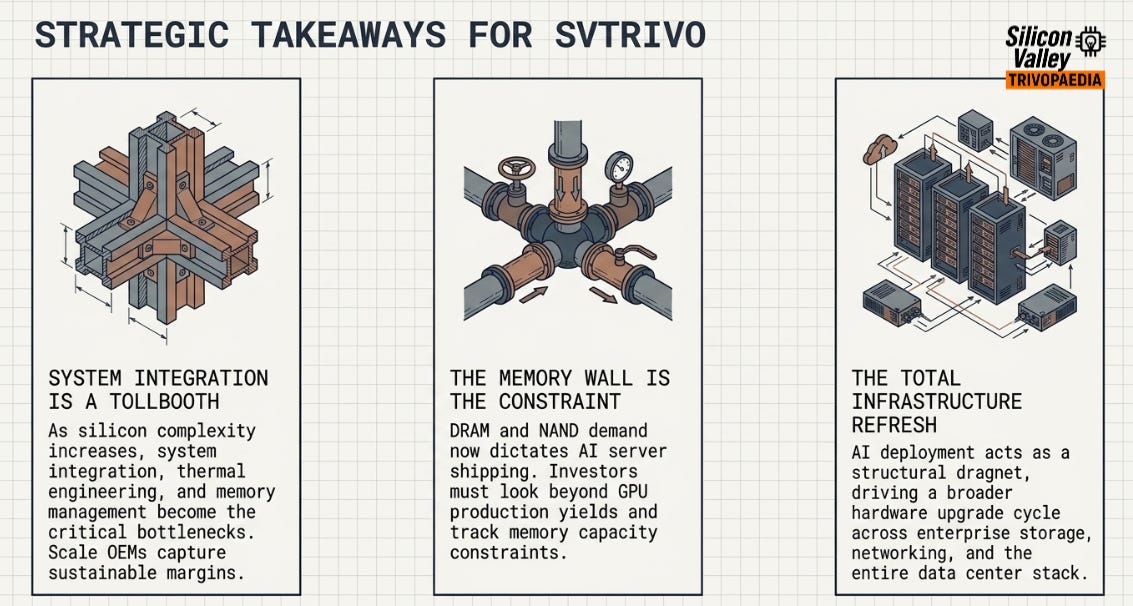
System Integration as a Tollbooth: As silicon complexity increases, system integration, thermal engineering, and memory management become critical deployment bottlenecks. OEMs with scale capture sustainable margins by delivering fully integrated architectures.
The Memory Wall Constraint: Demand for DRAM and NAND memory now directly dictates AI server shipment timelines. Investors monitoring the hardware supply chain must look beyond GPU production yields to track memory capacity constraints.
Enterprise Infrastructure Refresh: AI deployment is driving a broader hardware upgrade cycle across enterprise storage and networking, extending compute value across the entire data center stack.
Research published for SVTrivo under the core pillars: TECH, CAPITAL, EXECUTION.
Explore research on AI hardware architecture, semiconductor supply chains, and market execution at SVTrivo.com. New subscribers receive a 7-day free trial.